

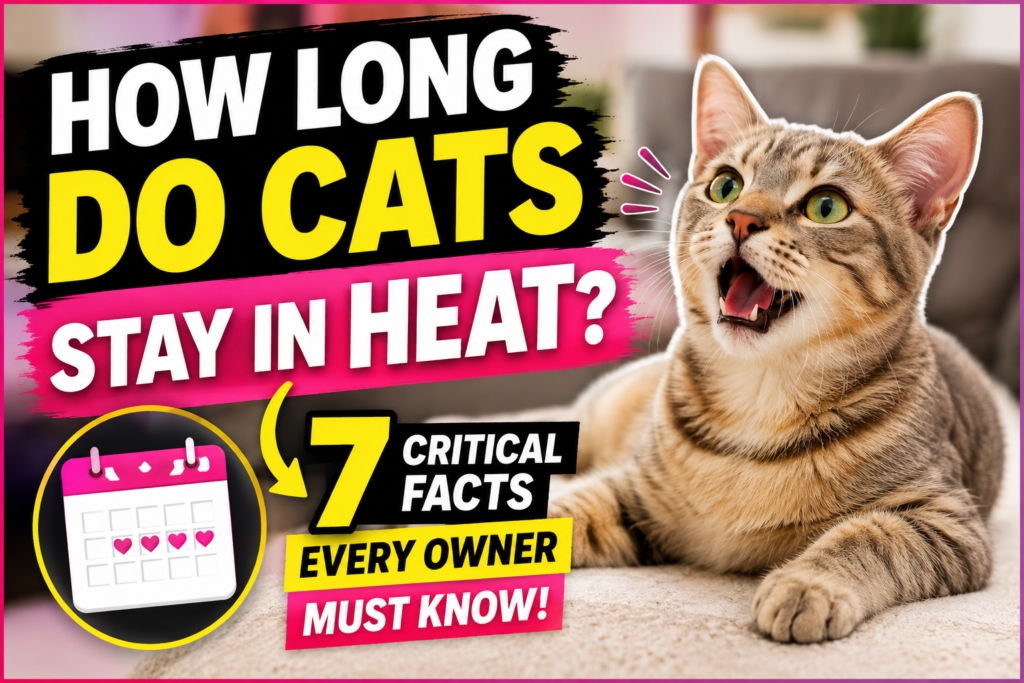
How Long Do Cats Stay in Heat?
Most cats stay in heat for 3 to 14 days, with the average being about 6 to 7 days. If your cat does not mate during this time, she will go out of heat for a short period and then cycle again every 2 to 3 weeks. Some cats can stay in heat for up to 19 to 21 days in rare cases
The Frantic Calls and Restless Nights
You know the sound. That loud, persistent yowling that seems to come from nowhere. Your cat is restless, rubbing against everything, and putting her rear end in the air. If you’re reading this, you’re likely in the middle of it right now, wondering how long this chaos will last. The good news? This phase is temporary. The better news? You now have a complete guide to understand exactly what’s happening and how to survive it.
Why Understanding Your Cat’s Heat Cycle Matters
Understanding your cat’s heat cycle isn’t just about surviving the noise. It’s about being a responsible pet owner.
Cats are seasonally polyestrous, meaning they have multiple heat cycles during the breeding season. An unspayed female can go into heat up to 20 times per year. Without knowing the signs and duration, you risk an unwanted pregnancy—or worse, missing signs that something is wrong.
Knowledge gives you control. When you understand the science behind her behavior, you stop feeling frustrated and start feeling empowered to help her.
The 4 Stages of a Cat’s Reproductive Cycle
To truly understand how long a cat stays in heat, you need to see the bigger picture. The heat cycle isn’t just one phase—it’s part of a four-stage process.
Stage 1: Proestrus (1–2 Days)
This is the warm-up. Estrogen levels begin to rise, but you likely won’t notice any obvious signs. Male cats may show interest, but your female isn’t ready to mate yet.
Stage 2: Estrus (The “Heat” Phase – 3 to 14 Days)
This is what everyone calls “being in heat.” Your cat is now receptive to males and can become pregnant. This is when the loud yowling, affectionate rubbing, and restless behavior kick in.
Average duration: About 7 days
Range: 3 to 14 days (can stretch to 19–21 days in some cats)
Stage 3: Interestrus or Metestrus (1–3 Weeks)
If your cat doesn’t mate, she enters this “reset” phase. She’ll go out of heat for 1 to 3 weeks before starting another cycle.
If she does mate and ovulates but doesn’t get pregnant, she enters metestrus, which can last 30–40 days.
Stage 4: Anestrus (2–3 Months)
This is the off-season. Hormone activity temporarily stops, usually during late fall and winter when daylight hours are shorter.
5 Clear Signs Your Cat Is in Heat
Your cat can’t tell you she’s in heat, but her body language screams it. Watch for these 5 telltale signs:
- Loud yowling or “calling” – She meows excessively to attract males
- Extreme affection – She rubs against you, furniture, and everything in sight
- The “mating position” – She raises her rear end and treads with her back legs when stroked
- Restlessness and rolling – She rolls on the floor more than usual
- Urine marking – She may spray urine on vertical surfaces to attract males
Important: Unlike dogs, cats do not typically bleed during heat. If you see bleeding, contact your vet immediately.
How Often Do Cats Go Into Heat?
Here’s where it gets intense. If your cat doesn’t mate, she will cycle every 2 to 3 weeks throughout the breeding season.
Breeding season in the Northern Hemisphere typically runs from January through late fall. Indoor cats and those in warmer climates may cycle year-round.
This means an unspayed cat can spend a significant portion of the year in or between heat cycles. It’s exhausting for her—and for you.
The “Fire Alarm”
Think of your cat’s heat cycle like a fire alarm that won’t stop ringing.
The alarm (estrogen) goes off, signaling “danger” (the urge to mate). Your cat responds with frantic behavior—yowling, pacing, trying to escape. The alarm keeps ringing until one of two things happens: either the fire is put out (she mates and ovulates), or the battery finally dies (the heat phase ends naturally).
But here’s the kicker: if you don’t change the battery (spay her), the alarm will keep going off every few weeks. That’s what life with an unspayed cat looks like during breeding season.
What Happens If Your Cat Mates?
If your cat mates during estrus, something remarkable happens. Cats are induced ovulators, meaning the act of mating triggers the release of eggs from the ovaries.
Once ovulation occurs, your cat will go out of heat within 24 to 48 hours.
Most female cats require 3 to 4 matings within a 24-hour period for ovulation to occur. And yes, a litter of kittens can have multiple fathers.
If she doesn’t mate, she’ll cycle again in 1 to 3 weeks.
6 Proven Ways to Calm a Cat in Heat
You can’t stop the heat cycle (unless you spay her), but you can make her more comfortable. Here are 6 vet-approved strategies:
- Keep her indoors – Prevent her from escaping to find a mate
- Provide a warm heating pad – The warmth can relax her and encourage rest
- Increase playtime – Interactive toys distract her from discomfort
- Use synthetic pheromones – Products like Feliway can have a calming effect
- Offer extra affection – Give her attention, but respect when she needs space
- Try catnip – It may provide temporary soothing effects (10–20 minutes)
Troubleshooting: What If Nothing Works?
Sometimes, even with all your efforts, the behavior continues. Here’s what to do:
If she’s excessively vocal and restless for more than 14 days: Contact your vet. Prolonged heat could indicate a hormonal imbalance or ovarian cyst.
If you notice vaginal bleeding: This is NOT normal for cats in heat. Schedule a vet appointment immediately.
If male cats are gathering outside your home: Keep all doors and windows securely closed. Intact males may try to enter your home to reach her.
If you’re considering spaying during heat: It’s possible, but it carries higher risks due to increased blood flow to the reproductive organs. Most vets recommend waiting until the heat cycle ends.
Common Myths About Cats in Heat
The Bottom Line: Spaying Is the Only Permanent Solution
If you’re not planning to breed your cat, spaying is the only way to permanently stop heat cycles.
Spaying before her first heat cycle (around 5–6 months of age) offers the most health benefits, including a significantly lower risk of mammary cancer and uterine infections.
Talk to your vet about the best timing for your cat.
Frequently Asked Questions
Q: How long does a cat stay in heat after mating?
A: If mating triggers ovulation, she’ll go out of heat within 24–48 hours
Q: How long are cats in heat for the first time?
A: First heat cycles typically occur between 5–9 months of age, and the duration is similar to adult cycles (3–14 days)
Q: Can a cat get pregnant while in heat?
A: Yes. Cats can become pregnant at any time during the estrus phase
Q: How long does a cat’s heat cycle last in total?
A: The complete cycle (from one heat to the next) averages about 3 weeks
Q: Do indoor cats go into heat?
A: Yes, indoor cats can cycle year-round due to artificial lighting
Conclusion: You’ve Got This
Understanding how long cats stay in heat gives you the power to manage this challenging phase with confidence. Remember:
- Heat lasts 3 to 14 days (average 7 days)
- Cycles repeat every 2 to 3 weeks if she doesn’t mate
- Signs include yowling, affection, and the mating posture
- Spaying is the only permanent solution
Your cat isn’t trying to drive you crazy—she’s responding to powerful hormonal instincts. With patience, the right strategies, and this guide, you can both get through it.
Have questions about your cat’s heat cycle? Drop a comment below—our team of pet experts is here to help. And if you found this guide useful, share it with a fellow cat owner who’s going through the same struggle!

With over 5 years of experience, Minnie J. McGuire covers sports news, offering sharp insights on games, teams, and athletes.

