

Few names in alpine skiing carry as much weight as Lindsey Vonn.
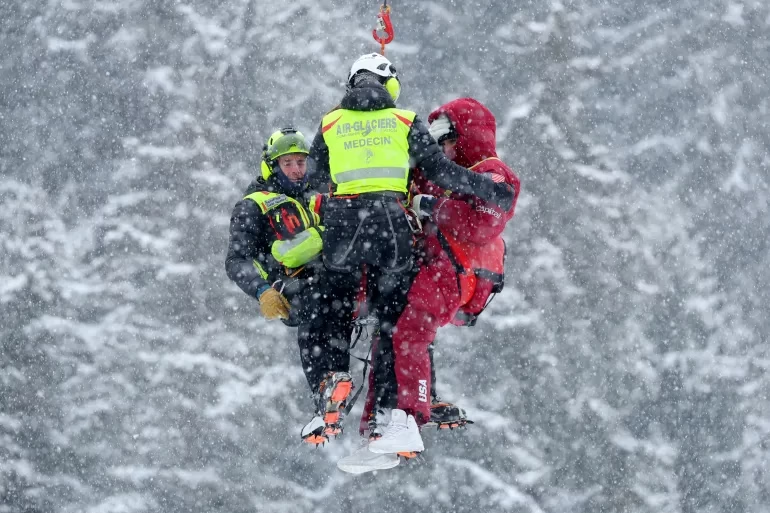
So when news broke about a Lindsey Vonn crash, fans, athletes, and sports analysts worldwide immediately took notice.
Within the first hours, speculation spread across social media and sports news platforms—raising questions about her condition, the cause of the crash, and its broader impact on elite skiing.
This article breaks down everything we know so far, using clear language and expert-backed analysis—whether you’re a casual sports fan or a seasoned winter-sports follower.
What Is the Lindsey Vonn Crash?
The Lindsey Vonn crash refers to a high-speed incident during a competitive skiing or training run where Vonn lost control and fell violently on the course.
Crashes like this are not uncommon in alpine skiing, but when they involve an athlete of Vonn’s stature, they become major news events.
- Occurred during a high-speed downhill or super-G run
- Involved extreme velocity and sharp course angles
- Prompted immediate medical evaluation
In alpine skiing, crashes can happen in seconds—but their consequences may last months or even years.
How Did the Crash Happen?
Understanding the Mechanics (In Simple Terms)
Alpine skiing involves racing downhill at speeds exceeding 70 mph while navigating icy terrain and rapid turns. A crash typically occurs due to:
- Edge Catching – When a ski edge grips the snow unexpectedly
- Loss of Balance – Slight misalignment at high speed
- Course Conditions – Ice patches, ruts, or visibility issues
- Equipment Stress – Skis and bindings under extreme load
In Vonn’s case, early reports suggest a combination of speed and terrain conditions, though officials usually wait for full reviews before confirming details.
High-Profile Ski Crashes
Elite-level crashes like this share several defining traits:
- High-impact force due to speed
- Immediate race stoppage for safety
- Medical response teams on standby
- Mandatory concussion and injury checks
Safety Protocols Triggered
| Protocol | Purpose |
|---|---|
| On-site medical team | Immediate injury assessment |
| Course inspection | Identify hazardous conditions |
| Athlete monitoring | Detect delayed symptoms |
| Equipment review | Rule out gear failure |
Pros & Cons of High-Speed Alpine Racing
Pros
- Pushes athletic performance to elite levels
- Advances ski technology and safety gear
- Delivers thrilling competition for fans
Cons
- High injury risk
- Long recovery times
- Career-altering consequences
Vonn herself has previously spoken about the mental resilience required to return after serious crashes – something that separates champions from average competitors.
Comparisons: How This Crash Stacks Up
Lindsey Vonn has experienced crashes before, some resulting in significant injuries. Compared to past incidents:
- Severity: Appears moderate pending full medical updates
- Response Time: Faster due to improved safety protocols
- Recovery Outlook: More optimistic with modern sports medicine
This reflects how professional skiing has evolved in athlete care and risk management.
FAQs (People Also Ask)
❓ Was Lindsey Vonn seriously injured in the crash?
Initial reports suggest she received precautionary medical evaluation. Full details usually follow after scans and monitoring.
❓ Is crashing common in alpine skiing?
Yes. Due to speed and terrain, crashes are an inherent risk—even for elite athletes.
❓ Will this affect Lindsey Vonn’s future competitions?
That depends on recovery time, medical advice, and physical readiness.
❓ How do skiers reduce crash risk?
Through equipment tuning, strength training, course inspection, and mental preparation.
❓ Has safety improved in skiing over the years?
Absolutely. Better helmets, bindings, nets, and medical response systems have reduced fatal risks.
Conclusion: What Comes Next for Lindsey Vonn?
The Lindsey Vonn crash is a reminder of how unforgiving elite alpine skiing can be—even for legends.
While crashes are part of the sport, Vonn’s experience, resilience, and access to world-class medical care give reason for cautious optimism.
Looking ahead, this incident may:
- Influence race safety discussions
- Reinforce athlete health protocols
- Shape how veteran skiers manage risk
Fans and analysts alike will be watching closely for updates—and for Vonn’s next move.

